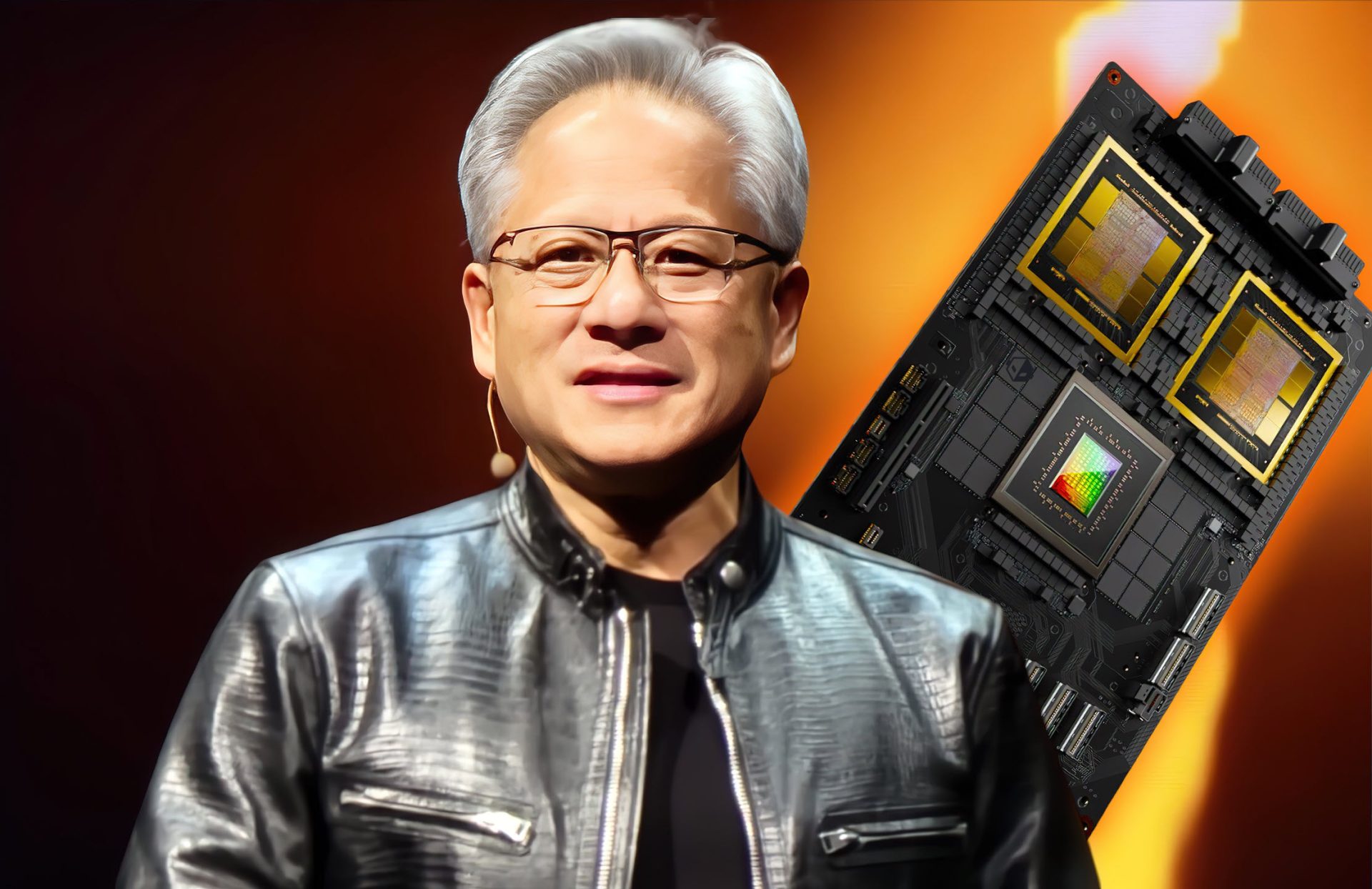
NVIDIA Corporation (NVDA) has long ridden the wave of AI enthusiasm, with its stock price soaring to unprecedented heights, cementing its position as a titan in the tech world. In recent months, however, the intense focus on artificial intelligence has brought with it new scrutiny and a complex competitive landscape. While the broader market grapples with the notion of an "AI bubble," a more tangible and structural challenge is emerging in the form of Application-Specific Integrated Circuits (ASICs). These specialized chips, custom-built for specific AI workloads, have fueled nvidia asic fears among some investors, prompting questions about the long-term sustainability of NVIDIA's dominance.
Despite these anxieties, NVIDIA's leadership remains steadfast. Colette Kress, NVIDIA’s Chief Financial Officer, has been notably vocal in dismissing concerns, providing a clear roadmap for how the company intends to not just weather the storm but continue its trajectory of innovation and market leadership. Her insights highlight a strategic approach that transcends mere hardware, emphasizing a comprehensive ecosystem and groundbreaking future architectures like Rubin.
The Fundamental Shift: From CPU Bottlenecks to GPU Acceleration
Kress’s assessment begins with a foundational observation: the AI industry is undergoing a massive and irreversible transition away from CPU-dominant computing towards an aggressive shift to GPUs. For decades, CPUs (Central Processing Units) were the workhorses of computing, adept at sequential processing and general-purpose tasks. However, the demands of modern AI, particularly in areas like deep learning and large language models, require immense parallel processing capabilities – a task where traditional CPUs inherently fall short.
“There’s just not going to be any improvement that we can see in terms of the other means of using CPUs,” Kress stated, underscoring the limitations of CPU architecture for the future of AI. GPUs (Graphics Processing Units), originally designed for rendering complex graphics, possess thousands of processing cores that can handle numerous computations simultaneously. This parallel architecture makes them uniquely suited for the matrix multiplications and tensor operations that form the backbone of AI algorithms, offering orders of magnitude greater performance for AI training and inference compared to even the most advanced CPUs. This isn't merely an upgrade; it's a necessary paradigm shift that NVIDIA has capitalized on, driving the industry forward into a new era of accelerated computing.
NVIDIA's Full-Stack Fortress: Beyond the Singular ASIC Approach
The core of nvidia asic fears stems from the perceived threat of specialized ASICs. These chips are designed from the ground up to excel at one specific task, like training a particular type of neural network or executing a specific inference model, often with superior power efficiency and lower latency for that singular purpose. On the surface, this might seem like a direct challenge to NVIDIA's general-purpose AI GPUs. However, Kress articulates a critical differentiator: NVIDIA’s strategy isn't about catering to a specific AI application with a singular product, but rather providing a comprehensive platform for the entire AI development lifecycle.
NVIDIA’s approach involves "7 different chips" working in concert, forming a robust environment for accelerated computing. This includes not just their leading GPUs (like the Hopper and upcoming Blackwell architectures), but also data processing units (DPUs), central processing units (CPUs) like Grace, high-speed networking solutions (Infiniband, NVLink), and other interconnects. This extreme co-design allows for seamless integration and optimized performance across the entire compute stack, from data ingestion to model deployment.
In contrast, the traditional ASIC model often presents a more fragmented solution. While an ASIC might outperform a GPU on a narrow benchmark, it typically lacks the flexibility and adaptability to handle the vast and evolving array of AI applications and research. Companies adopting ASICs often find themselves locked into a specific hardware pipeline, making it costly and time-consuming to adapt to new AI models or use cases. NVIDIA’s integrated, versatile platform offers a powerful counter-argument to the perceived threat, providing a future-proof solution for enterprises navigating the rapidly changing AI landscape. For a deeper dive into how NVIDIA addresses these challenges, you can read more in NVIDIA CFO Dismisses ASIC Threat: CUDA & Ecosystem Are Key.
CUDA: The Unseen Hand Guiding AI Innovation
Perhaps the most critical, yet often underestimated, component of NVIDIA's defensive strategy against ASIC rivals is its CUDA platform. CUDA, or Compute Unified Device Architecture, is more than just a programming language; it's a comprehensive software stack, including libraries, APIs, and developer tools, that enables developers to harness the parallel processing power of NVIDIA GPUs. Kress emphasizes that CUDA advancements alone have delivered an "X factor improvement" in performance across various libraries, making it an indispensable asset for AI developers.
The power of CUDA lies in its extensive ecosystem. Over 20 years in the making, it boasts millions of developers, thousands of applications, and a vast array of specialized libraries (e.g., cuDNN for deep learning, cuBLAS for linear algebra) optimized for AI workloads. This creates a powerful network effect: developers choose NVIDIA because of CUDA's capabilities and extensive support, and the growing developer base further solidifies CUDA's position as the de facto standard for GPU computing in AI.
For businesses and researchers, switching from CUDA to another platform, especially an ASIC-specific one, represents a significant investment in time, resources, and retraining. The existing codebase, community support, and proven performance make NVIDIA's AI offerings incredibly sticky. This robust software moat significantly raises the barrier to entry for potential competitors, including ASIC manufacturers, who would need to build an equally comprehensive and mature software ecosystem from scratch. While NVIDIA Faces ASIC Fears: Is Its AI Dominance Shaking?, the strength of CUDA acts as a powerful insulator against these tremors.
Practical Tip: Evaluating AI Hardware Beyond Raw Speed
When businesses evaluate AI hardware solutions, it's crucial to look beyond raw processing speed or cost per flop. Consider the total cost of ownership, which includes developer talent acquisition, retraining costs, software development time, and the flexibility to adapt to future AI model advancements. NVIDIA’s full-stack approach, anchored by CUDA, often provides superior long-term value by reducing these peripheral costs and offering greater versatility.
Anticipating the Future: The Rubin Architecture and What It Means
Looking ahead, NVIDIA is not resting on its laurels. The company is continually pushing the boundaries of AI hardware with new architectures. One of the most anticipated releases is the Vera Rubin architecture, a next-generation platform designed to meet the escalating demands of future AI models. Kress shared an exciting update: "Vera Rubin, we're pleased to say that it has been taped out. We have the chips and are working feverishly right now to get ready for the second half of next year to bring that to market."
This "taped out" status signifies a major milestone, meaning the chip design is complete and ready for manufacturing. With a targeted mass production and market release by H2 2026, the Rubin architecture, along with its associated networking infrastructure, promises to deliver significant advancements in performance, efficiency, and scalability. This continuous innovation cycle is vital for maintaining NVIDIA's leadership, especially as AI models grow exponentially in size and complexity, demanding ever-greater computational power.
The anticipation around Rubin reflects the industry's need for increasingly powerful and efficient AI accelerators. It represents NVIDIA's proactive response to the evolving competitive landscape, including the threat from ASICs. By continually delivering cutting-edge hardware tightly integrated with its dominant software ecosystem, NVIDIA aims to not only sustain but extend its lead in the AI domain, ensuring that nvidia asic fears remain largely theoretical rather than practical challenges to their market share.
Conclusion
While the shadow of nvidia asic fears and broader AI bubble concerns might loom, NVIDIA’s strategic response, as articulated by CFO Colette Kress, paints a picture of robust resilience and forward-thinking innovation. The company's confidence is rooted in a multi-pronged strategy: leading the industry's fundamental shift from CPU to GPU computing, offering a comprehensive, integrated full-stack solution that outperforms singular ASICs, and leveraging the unparalleled strength of its CUDA software ecosystem. With the upcoming Rubin architecture already on the horizon, NVIDIA is not just defending its territory but actively shaping the future of AI. For businesses and investors, understanding this holistic approach is key to recognizing why NVIDIA continues to be a dominant force, poised to capitalize on the ongoing AI revolution.